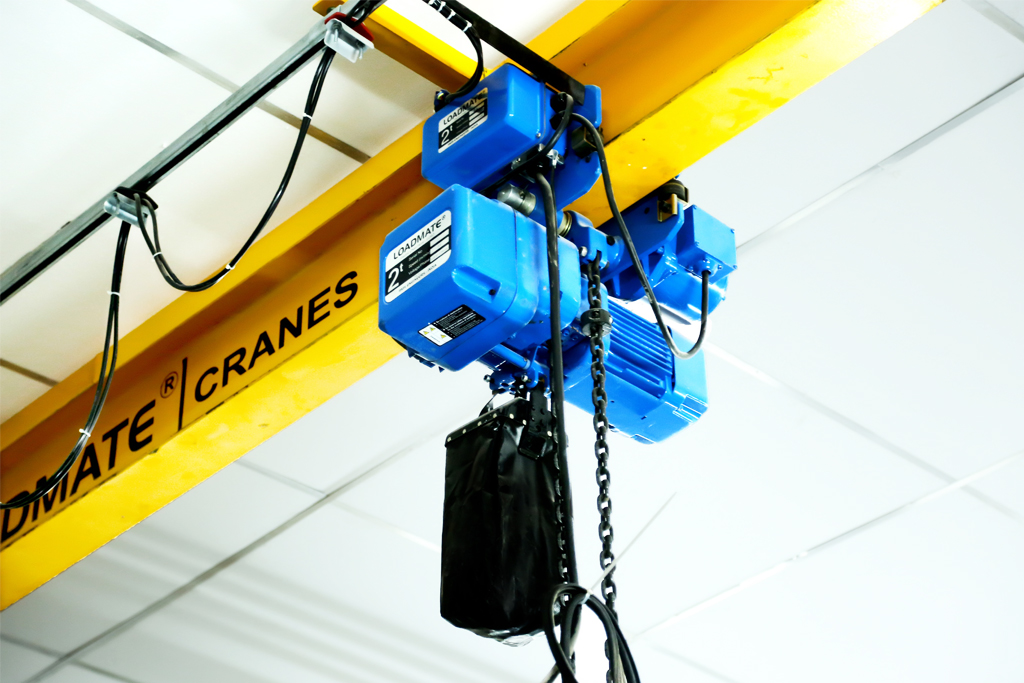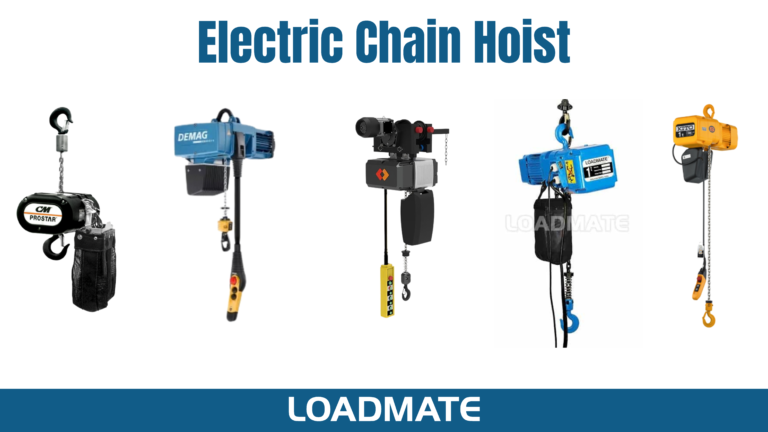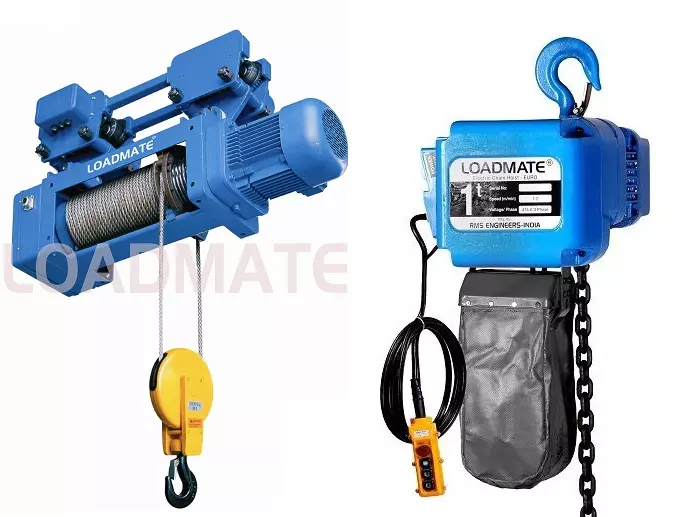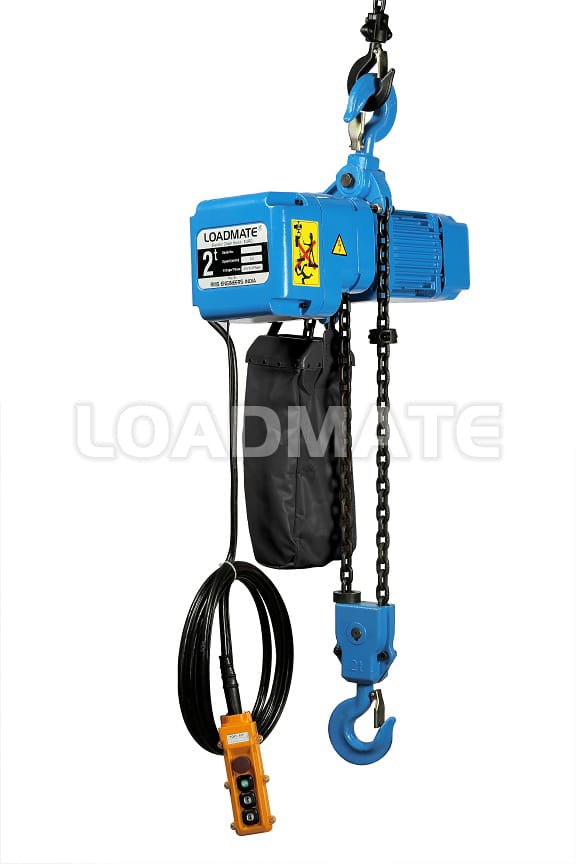
You just got your new Electric Chain Hoist put in and wish to start out using it right away. However, check that you check for the subsequent tips for a secure environment at your organisation.
- Preparations: Read carefully what has been stated in the instruction manual provided along with the Chain hoist, making sure that each step is correctly completed and all parts are strongly fixed.
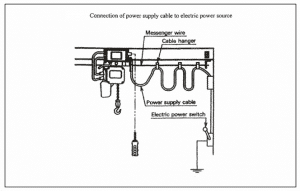 Electric Chain Hoist Primary Checks[/caption]
Such as:
- Is the electric chain hoist correctly installed on the trolley?
- Is the trolley stopper correctly located on the beam?
- Are bolt, nut and split pin tightened?
- Can push-button cord wire support the pulling force made on controller suspension?
- Is cable support strongly fixed on the cable support arm?
Danger: Do remember to cut off the power source or breaker switch before repairing any machinery or electrics.
- Lifting Test
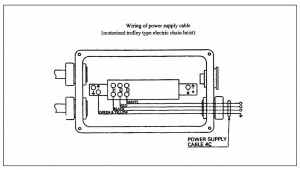
Connect the main switch power to the hoist and press down the push-button switch. If the hook travels in the wrong direction, the power supply phase is not right. Therefore, cut off the power source or breaker switch, exchange any two phases of the three-phase electric power at the power switch of the hoist, and then the hook will travel towards the push button direction.
- Traversing Test: Test whether the control over the trolley keeps the same direction as it travels. Make sure that the trolley stably travels. Paste E/W or N/S on push buttons.
- Limit Switch Test: Refer to nameplates AB or AC on which writes upper limit or upper/lower limit. They are attached to the hoist to tell which type of limit switch is fixed. No nameplate means that there is no limit switch.
- Upper Limit Switch: Press UP push button until lifting hook touches upper limit switch. Check if the hoist stops at the upper limit.
- Lower Limit Switch: Press down the push-button until the bottom hook reaches the lower limit and the reverse chain stopper touches the limit switch. Check if it stops at the lower limit.
In such two cases, you should check if the chain spring has enough space when it is compressed.
- Lifting & Falling Brake Test: Lift a moderate load. Press down push-button switches to lower and/or lift or descend the hook several times. When the button is released, the brake should immediately stop the motor from running and the weight should stop at the very position.
- Emergency Stop Button Test (optional): While pressing down push-button switches, press down the emergency stop button and then check whether the hook has stopped running and whether the hoist works in line with the push-button switch. Finally, turn the emergency stop button to the right, release it after it pops out. Then operate it again. If anyone step fails, check the connection wire and self-lock of the emergency stop button.
Checks to Perform Before Using an Electric Chain Hoist
Test the lifting mechanism
You have to conduct the test to ensure that the hook of your chain hoist works rightly and the system moves in the desired direction. To start this test, the main switch needs to supply power to the hoist.
When the direction of the hook’s movement is in the wrong direction, your power supply may have a problem. You have to change it without any delay. It can be done by interchanging any 2 phases from the 3 phase connection supply.
Arrange a brake test
Failure to brakes is one of the problems of chain hoists. Although it is a common problem of chain hoists, it can injure others and cause mishaps. That is why you must inspect the brake system to avoid complications in the future.
What should you do for this test? By releasing the load, you have to check how the load stops at its position while the switch is controlled. You can choose moderate loads for this test and ensure your safety.
Test the Cross Traversing motion
The trolley needs to traverse rightly based on your control. You can engage qualified persons to ensure that your trolley moves consistently. The trolley in good condition will be easily controllable.
Certified persons for inspection will check out several other things-
- Valves, latches, lines and other elements of a pneumatic system for leakage
- Odd sounds coming out of your hoist and trolley
- Proper mechanisms of every part
- Corrosion issues
- Chain problems- compression, elongation, deformation
Periodic inspection
You need to do a visual and audio inspection to check out the hoist and its parts. You can disassemble these parts to identify issues. It is about the monthly and weekly inspection of your hoist. The operator can perform it easily.
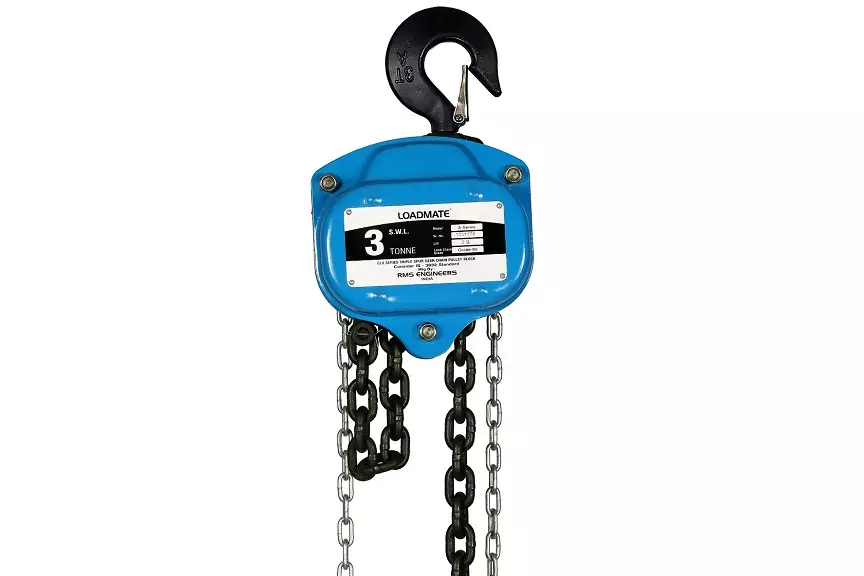
For the manual hoists, you have to check out several other parts.
- Tagged Hoist- Your hoist must not be tagged with an odd sign.
- Hand Chain Control- The hand chain pull must align with the motions of travel directions.
- Damages to hook- Nicks, cracks, twist, and gouges
- Hook Latch- Make sure that the latch is not missing.
Always follow the guidelines of chain hoist manufacturers.
At the time of installing the chain hoist and preparing it for your use, you have to know the right guidelines. You have to make the proper installation of the hoist, trolley, stopper, and other components.
You can contact us to know more about the safety checks and maintenance tips. LOADMATE is the leading crane and hoist manufacturer, providing you with quality solutions. We have professionals to test every part of the chain hoist before it is supplied to you. All our lifting equipment are designed and manufactured to last long.