
Home / Products / Under Slung Cranes

Underslung EOT Cranes

Two underslung cranes. Pick the one built for your bay.

Underslung cranes hang from the bottom flange of the runway beams instead of riding on top — saving headroom and letting bays share runways. Choose the single girder for lighter, economical lifting, or the double girder for higher capacity and span.

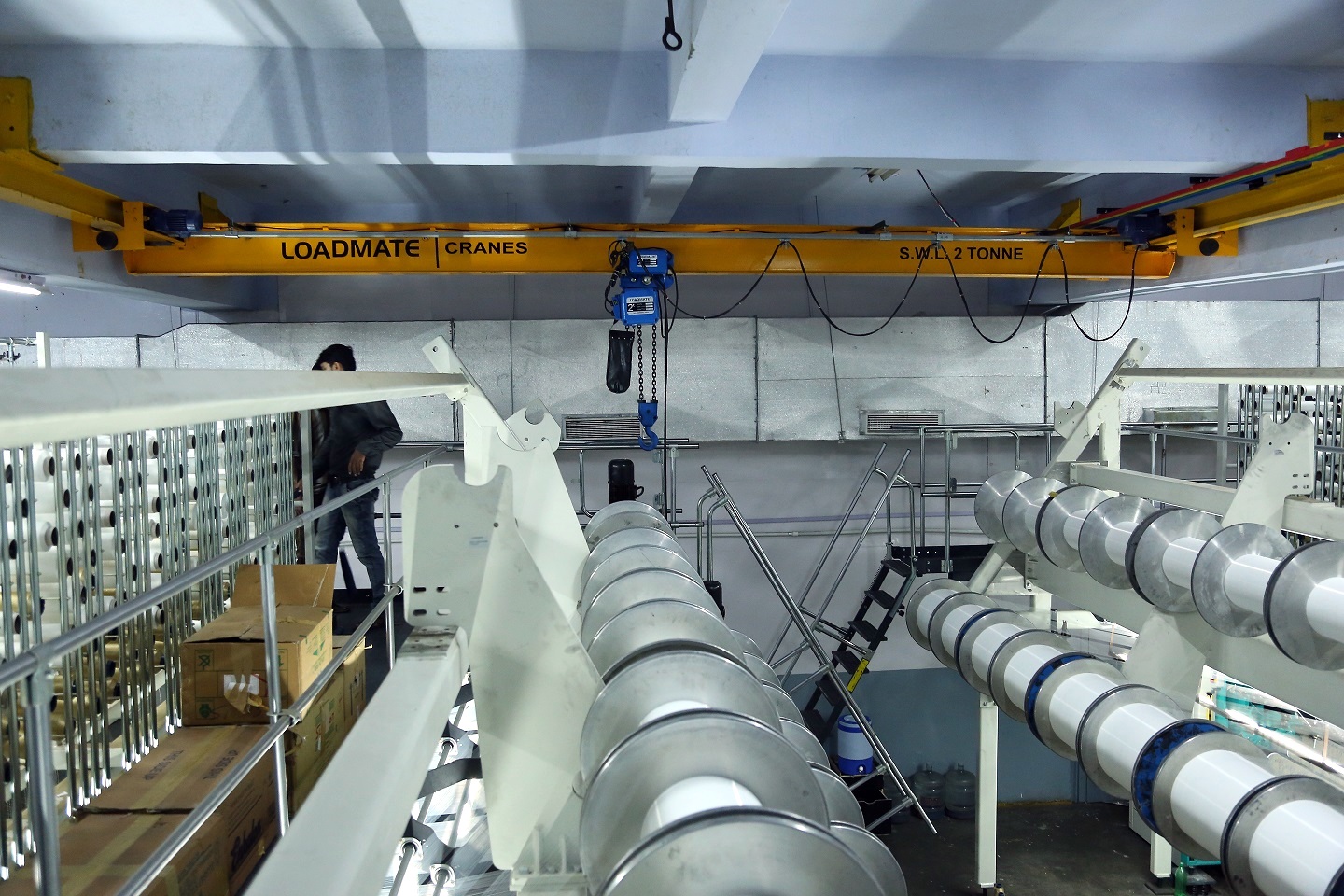
LOADMATE Single Girder Underslung Crane

Single Girder Underslung Crane

Lightweight single-girder crane suspended from the runway’s bottom flange — excellent headroom use for light-to-medium loads.

Up to ~10 TCapacity
Low headroomBuild
Light–mediumDuty

Best for: low-roof bays, workshops and lines where you want close-to-the-roof lifting and the ability to span between columns.
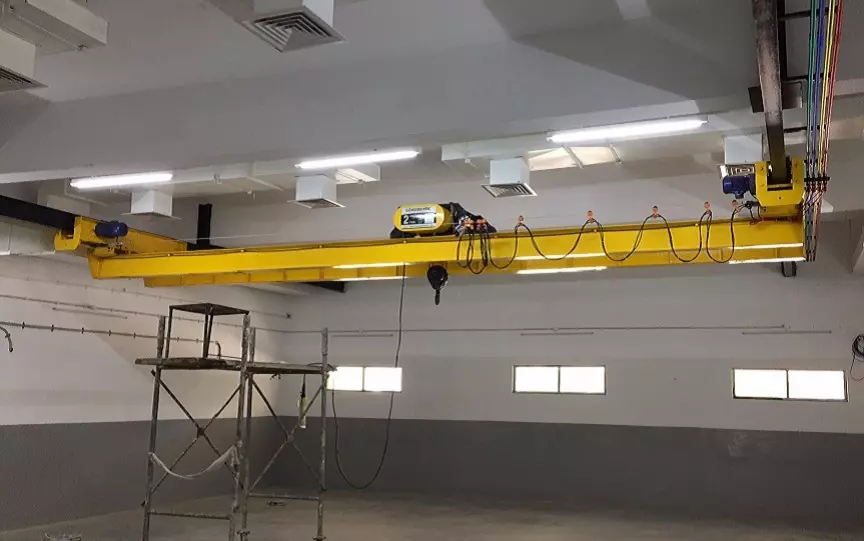
LOADMATE Double Girder Underslung Crane

Double Girder Underslung Crane

Heavy-duty underslung crane on two girders — higher capacity and longer spans while keeping the headroom advantage.

Up to ~25 TCapacity
HigherLift
Medium–heavyDuty

Best for: heavier underslung handling and longer spans where you still need to suspend from the roof structure.

35+ yrsmanufacturing Up to 25 Tunderslung capacity 1,00,000+cranes & hoists installed ISO & ZED Goldcertified
Spec by spec

Single vs double girder underslung, line by line

The differences that actually drive the decision — capacity, span, duty and cost.

  Single Girder Double Girder
Lifting capacity Up to ~10 T Up to ~25 T
Span Short–moderate Moderate–long
Headroom use Excellent (roof-hung) Excellent (roof-hung)
Duty / service class Light–medium Medium–heavy
Dead weight & cost Lighter → lower cost Heavier → higher cost
Runway sharing Yes Yes
Design standards IS 3177, IS 807 IS 3177, IS 807
Relative price Lower — economical Higher — heavy-duty

Capacity, span and duty class are typical — final figures are confirmed per your application on the product datasheet.

Which one is right for you?

A 30-second decision

Run your requirement against these. If most points fall in one column, that’s your pick.

Choose single girder

The economical fit

  • You’re lifting up to about 10 tonnes
  • Headroom is tight — you want close-to-roof lifting
  • Operation is light to medium
  • Budget and lighter runway cost matter
  • It’s a workshop, line or low-roof bay
  • Spans are short to moderate

Choose double girder

The heavy-duty fit

  • You’re lifting more than ~10 tonnes
  • You need longer spans
  • Operation is medium to heavy
  • You want higher hook height within the underslung layout
  • Duty cycle is higher
  • Loads and spans justify two girders
Rule of thumb: up to ~10 T at light-to-medium duty → single girder underslung. Higher capacity or longer span → double girder underslung. Send your load, span and headroom and we’ll size it.
Built in, not bolted on

What every LOADMATE underslung crane includes

Single or double girder, the engineering underneath is the same standard — designed around safety, uptime and your exact bay.

Duty-class engineering

Designed to IS-3177 & IS-807 for your exact duty class, with a defined factor of safety on every member.

Overload & limit protection

Overload limiter, hoist limit switches and end-travel stops protect the load, the crane and the people under it.

Smooth VFD controls

Variable-frequency drives give soft start/stop and anti-sway travel for precise, safe positioning.

Roof-suspended design

Hung from the runway’s bottom flange to save headroom and let adjacent bays share runway columns.

Built to your bay

Custom span, lift, capacity and power supply — single or double girder, pendant or radio control.

Pan-India install & service

In-house erection and a responsive service team across India, so an expansion never means downtime.

Where each one works

Applications by industry

A starting point by sector — final selection always comes down to your load, span and duty cycle.

Low-roof workshops

Close-to-roof lifting where headroom is tight.

Often single girder

Heavier production bays

Higher loads and longer spans, still roof-hung.

Usually double girder

Assembly lines

Light-to-medium handling along the line.

Often single girder

Process & equipment bays

Heavier equipment handling in tall structures.

Usually double girder

Shared-runway layouts

Adjacent bays sharing runway columns.

Either — by load

Warehousing & multi-bay

Long-travel handling across spans.

Usually double girder
Why LOADMATE

Whichever you choose, it’s engineered to last

Both configurations are built in-house to IS-3177 & IS-807 and backed by a pan-India service team — the same standard behind every LOADMATE crane.

35+years of manufacturing
25 Tunderslung capacity
1,00,000+cranes & hoists installed
30+countries exported to
ISO9001:2015 & 45001:2018
ZEDGold certified

Engineered for precision, built to last

Good to know

Questions buyers ask us

What is an underslung crane?

An underslung (under-running) crane travels on the bottom flange of runway beams hung from the roof structure — the answer for low-headroom buildings, giving hook coverage right to the walls in capacities of 0.5 to 10 tonnes.

When should I choose underslung instead of a standard EOT crane?

Choose underslung when headroom is tight or columns cannot take runway loads; choose a top-running EOT crane for higher capacities and hook heights. Roof structure capacity decides feasibility.

What’s the advantage of an underslung crane?

It hangs from the bottom flange of the runway beams instead of running on top, which saves headroom and lets neighbouring bays share the same runway columns.

Single or double girder underslung — how do I choose?

Single girder suits lighter loads and shorter spans economically; double girder handles higher capacity and longer spans. We confirm from your load and span.

Can it run on my existing runway?

Often yes — underslung cranes are flexible with runway layouts. Share your runway and building drawing and we’ll check headroom and flange capacity.

Is it built to standards and tested?

Yes. Cranes are designed to IS-3177 / IS-807, tested before dispatch and supplied with certificates.

Still deciding? Send us your numbers.

Share your load, span and headroom and our engineers will recommend the right underslung crane — single or double girder, sized for your bay.

  • IS 3177 & IS 807Built to Indian crane codes
  • 125% load-testedEvery crane, before dispatch
  • ISO 9001 · ISO 45001 · ZED GoldQuality & safety certified
  • India & 30+ countriesCranes supplied and serviced