
Home / Products / Jib Cranes / Wall Travelling Crane
Cantilever Cranes · Wall Runway
Wall Travelling Crane
A jib carried on a wall-mounted runway — it slews for reach and travels for coverage, serving a full production line while using no floor space at all. Capacity to 20 tonnes, arm to 15 m, lift to 60 m.
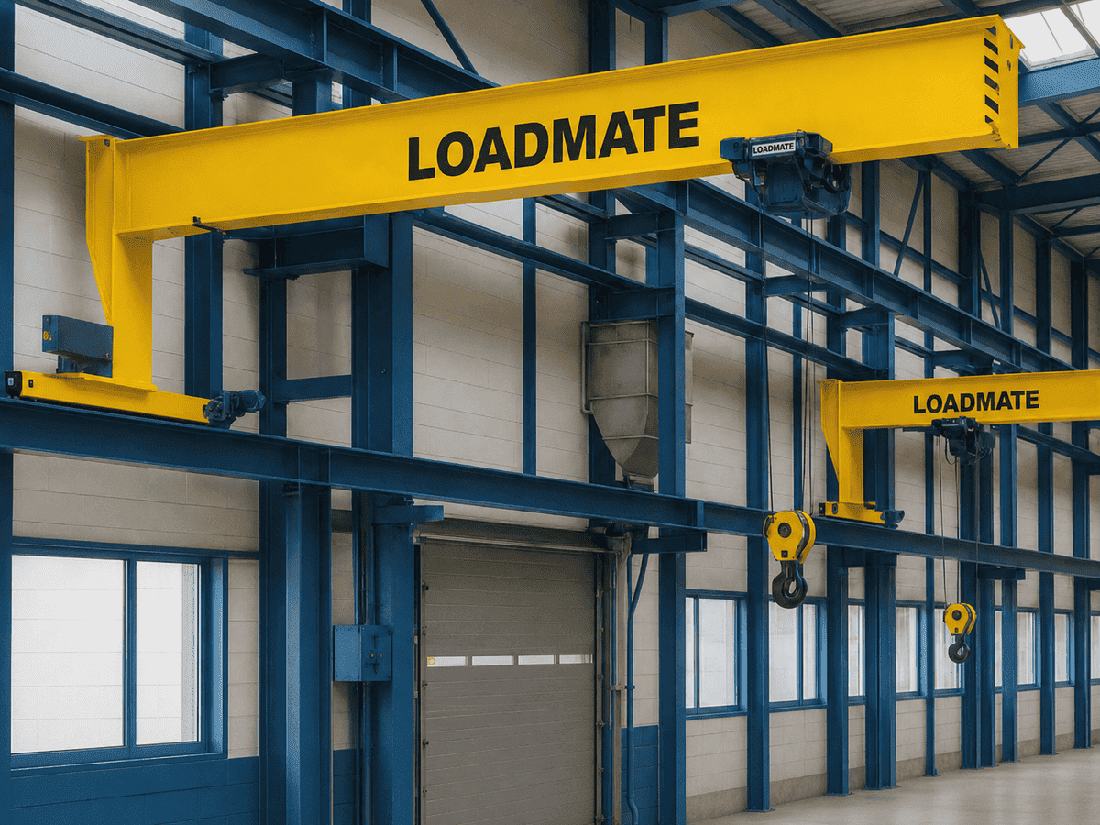
Wall Travelling Crane.
A fixed wall jib serves one spot. A wall travelling crane serves the whole line: the jib is carried on a runway fixed to the building wall or columns, so it slews for reach and travels for coverage. It is the answer where a row of machines or workstations all need lifting but a full overhead crane is unnecessary — or is already there and busy with something else.
Capacities reach 20 tonnes, with arm lengths to 15 metres and lift heights to 60 metres. Because the whole crane hangs off the wall structure it consumes zero floor space and leaves the aisle clear. Running below an existing overhead crane, it takes the light and frequent lifts so the main crane stays free for heavy work.
Capacity & specification chart.
Cantilever crane range — capacity to 20 Ton, arm length to 15 m. Wall structure is assessed as part of every proposal.
| Capacity (S.W.L) | MT | 0.25 | 0.5 | 1 | 2 | 3 | 5 | 7.5 | 10 | 15 | 20 |
|---|---|---|---|---|---|---|---|---|---|---|---|
| Arm Length (max) | Mtr | 6 | 8 | 10 | 12 | 12 | 15 | 15 | 15 | 12 | 10 |
| Height of Lift (max) | Mtr | 60 | 60 | 60 | 60 | 60 | 60 | 60 | 60 | 40 | 40 |
| Slew Angle | Deg | 180–270 | 180–270 | 180–270 | 180–270 | 180 | 180 | 180 | 180 | 180 | 180 |
| Hoist Type | – | ECH | ECH | ECH | ECH | ECH | ECH/WRH | WRH | WRH | WRH | WRH |
| Travel Speed | m/min | 20 | 20 | 20 | 16 | 16 | 12 | 12 | 10 | 8 | 8 |
| Slew | – | Manual | Manual | Manual | Manual/Mot | Motorised | Motorised | Motorised | Motorised | Motorised | Motorised |
| Duty Class | – | M3–M6 | M3–M6 | M3–M6 | M3–M6 | M3–M6 | M3–M6 | M3–M6 | M3–M6 | M3–M5 | M3–M5 |
Arm length and capacity trade against each other — the longest arms are available at lower capacities. The wall or column line is assessed for the resulting loads before any proposal is issued.
Specification sheet.
Standard ranges — send your requirement and we’ll configure to match.
Mechanical & electrical
What comes built in as standard.
Optional upgrades & add-ons.
Why a wall travelling crane.
Zero floor space
The whole crane hangs off the wall — aisles, machine bases and floor stay clear.
Serves the whole line
Travels along the building, so one crane covers a full row of workstations.
Frees the overhead crane
Takes light, frequent lifts so the main crane stays available for heavy work.
Structure assessed first
We evaluate the wall or column line before proposing anything.
Long reach available
Arms to 15 m, with lift heights to 60 m.
Manufactured in-house
Designed, fabricated and load-tested at our Surat facility.
Three ways to specify it.
Wall mounted runway
Runway brackets fixed to the building wall.
Best for: Solid walls with adequate structural capacity.
Column mounted runway
Runway carried on the existing building column line.
Best for: Portal frame sheds with no load-bearing wall.
Freestanding runway
Runway on its own columns, independent of the building.
Best for: Where the existing structure cannot carry the loads.
Industries we serve.
Tap any industry for application detail.
Designed and certified to published standards.
IS 3177
Code of practice for cranes
Design, construction, testing and operation of travelling cranes.
IS 807
Structural design of cranes
Design, manufacture, erection and testing of crane structures.
IS 2062
Structural steel
Hot-rolled steel used for the jib and runway fabrication.
ISO 9001 + ZED
Quality & manufacturing
ISO 9001:2015 certified plus ZED Gold tier.
Wall Travelling Crane — technical questions.
What is the difference between a wall travelling crane and a wall mounted jib crane?
Coverage. A wall mounted jib is fixed at one point on the wall and slews to serve the arc around that point. A wall travelling crane carries the jib on a runway along the wall, so it slews for reach and travels along the building — serving an entire production line rather than one workstation.
Can it run underneath an existing overhead crane?
Yes, and it is one of the most common reasons to install one. The wall travelling crane runs below the main crane runway, taking light and frequent line-side lifts so the overhead crane stays free for heavy work. Clearances are checked at the design stage so the two never conflict.
Will my wall or column line carry it?
That is assessed before anything else. Our engineers evaluate the wall or column line — sections, spacing, condition and existing loads — and detail reinforcement where needed. If the structure cannot carry it, a freestanding runway on its own columns is the honest recommendation, and we design that too.
How much floor space does it need?
None. The entire crane is carried by the wall or column runway, so the aisle, machine bases and floor stay completely clear — the main reason plants choose it over a pillar jib in tight production areas.
What arm length can you supply?
Up to 15 metres. Arm length and capacity trade against each other, so the longest arms are available at lower capacities. Send us the capacity and the reach you need together and we will confirm what is achievable.
What is the typical lead time?
Standard configurations typically ship in 8 to 12 weeks from order confirmation. Engineered builds and freestanding runways take longer, and we confirm a delivery date in writing at the time of order.
Related lifting solutions.
Need a Wall Travelling Crane quote?
Send your requirement and our application engineers respond within 24 hours with a configuration, spec sheet and quote.
- IS 3177 & IS 807Built to Indian crane codes
- 125% load-testedEvery crane, before dispatch
- ISO 9001 · ISO 45001 · ZED GoldQuality & safety certified
- India & 30+ countriesCranes supplied and serviced