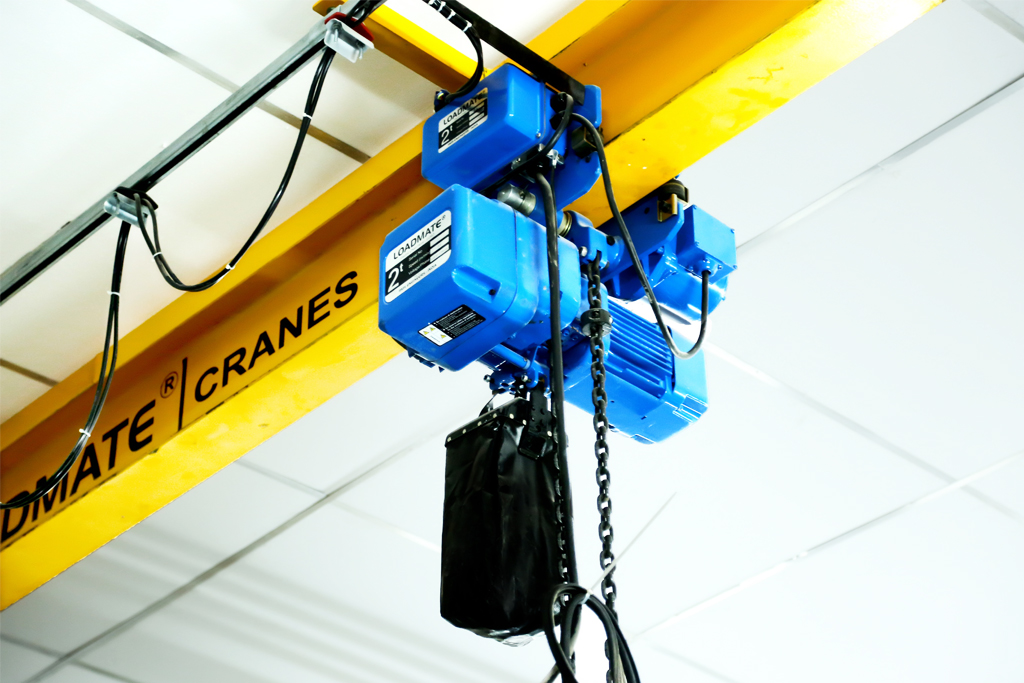
Cranes are the workhorses of modern industry. They are indispensable in various sectors, from towering skyscrapers to intricate manufacturing facilities. However, just like any heavy machinery, cranes are not immune to wear and tear, especially given their critical role in heavy lifting and often 24/7 operations. Therefore, regular inspections are vital. Let's delve into why this is crucial and how to do it.
1.The Critical Need for Crane Inspections
Due to their relentless duty cycles, Cranes undergo immense stress, often concentrating on specific components. Tiny damages or wear and tear can snowball into catastrophic failures, posing risks to the equipment and, more alarmingly, to human lives.
2.The High Cost of Negligence
A malfunctioning crane can wreak havoc in multiple ways. At best, you're looking at significant repair costs and operational downtime, which impact the bottom line substantially. At worst, crane failures can result in tragic accidents, often with fatal outcomes, leading to irreplaceable human and financial losses.
3.Who Should You Trust for Crane Inspections?
To minimise these risks, regular crane inspections by qualified professionals are non-negotiable. According to international industrial standards, crane inspectors should have at least 2,000 hours of field experience, encompassing maintenance, repair, modification, and functional testing of cranes and hoist components. This ensures they can perform inspections that meet national and international safety standards.
4.Daily Checks: An Ounce of Prevention
While monthly crane inspections are valuable, daily checks are essential for a reason. The Occupational Safety and Health Administration (OSHA) recommends daily inspections before each shift to maximise safety and performance.
5.What Should a Daily Inspection Cover?
- Initial Safety Assessment: Before even laying a finger on the crane's controls, it’s critical to lock out the crane and hoist and assess the surrounding area for potential safety hazards.
- Preliminary Equipment Check: This involves inspecting components like the trolley, bridge, hoist, and electrical systems to ensure no visible signs of damage or wear and tear. Also, ensure that wire ropes are correctly seated in the drum grooves, among other checks.
- Powered Systems Safety Check: This stage includes inspecting electrical components and control systems. Ensure buttons return to off positions automatically upon release and that warning devices function correctly.
- Hook Safety Checks: A thorough crane inspection is crucial because the hook bears the brunt of lifting stress. Look for wear, cracks, or distortions, and ensure that safety latches are operational.
- Wire Rope and Load Chain Inspection: Walk around 360 degrees of the hook block to check the load chain and wire rope for any signs of wear or damage.
- Bottom Block Safety: Check for structural damage or cracks and verify that sheaves rotate smoothly.
- Miscellaneous Checks include verifying that the motor brakes are working correctly, ensuring no oil leaks, and confirming the condition of air and hydraulic lines.
6.What is a daily inspection?
While a designated and qualified personnel would be required to perform the annual inspection and routine inspection needs to be performed by the operator daily. This needs to be done every day before and after the crane is being operated. A checklist must be maintained and signed off, ensuring all routine checks are performed. OSH guidelines refer to this daily inspection as a safety check, and it is necessary to avoid factory floor mishaps and malfunctioning.
An overhead crane that needs to be considered while performing a daily inspection is as follows.
- Any form of deterioration, such as leakages in tanks, valves, drain pumps, etc., must be taken into account and looked out for.
- All the crane components that function during operation need to be checked for maladjustments that might hinder the operation.
- Cracks or deformation on hooks and bolts must be visually inspected.
- Any form of connection such as hoist chains needs to be visually inspected for twists, distortions, wear, and tear.
- Every working component or mechanism must be inspected for excess wear and tear.
- Any non-compliance of rope reeving concerning the manufacturer's recommendations must be tended to.
7.Factors to know before performing a proper inspection
Before one can perform a thorough and effective inspection of an overhead crane, one needs to be aware of a few factors or aspects concerning it. They are listed below in brief.
- The particular items which are to be inspected must be identified beforehand.
- The proper manner of usage of the crane's particular components must be known while inspecting the crane.
- The inspection procedure has to be documented properly for perusal and further analysis requirements.
- The lockout or tag-out procedures of the inspection must be ascertained beforehand.
- The contact person we need to connect with if anything goes wrong and requires repairing or servicing.
- Any extra information provided in the operational manual must be given a read and paid heed to.
8.Who can be deemed as qualified to perform the crane inspection?
CMAA (Crane Manufacturer's Association of America) dictates that a crane inspector must have a cumulative field experience of at least 2,000 hours relating to the functional testing, maintenance, servicing, repairing of cranes and the associated hoist equipment.
It further states that no individual must be allowed to perform any form of crane inspection if they are devoid of any appropriate training and subsequent knowledge of the regulations and codes of the concerned equipment. Formal training is required in the following aspects to be eligible for performing an inspection.
- Basic understanding of report writing and related documentation.
- Thorough knowledge of cranes and hoist equipment and its associated terminology so that he or she can effectively communicate.
- Safety and design regulations relating to overhead cranes.
- Local, State and Federal standards and codes must be adhered to.
- Safe and Best practices of the opening of hoists and cranes.
9.Hoist Pre-Operational Inspection: Limits, Chain and Hook
What is a Pre-Operational inspection?
In other words, pre-operational inspection is known as frequent hoist inspection. You have to perform this inspection between the periodic inspections. In case of it, you don't have to maintain any records. To get the best results, we recommend you conduct this inspection before every shift. It will ensure that the highest it is in the proper condition will give you service precisely. It will help you to determine whether there is an error in the hoist.
How to check the upper and lower limits of the hoist?
Checking the lower and upper limits of the hoist is an essential part of the inspection. You must know how to do it. Here are the points that you need to know.
- It would help if you started running the hoist without any load.
- Take a look if the highest is making any strange noises.
- If you see the failure of the switch limit, it is time to get a new hoist. The purpose of the switch limit is to stop the hoist from hitting the hook block. Or else it may cause some severe damage.
- You have to follow the same procedure if you are checking the upper switch limit. While lowering the hoist, check whether it's making any strange sound.
- Now, you have to review the wire ropes as well as the chains before using them.
- Make sure to change the hoist if the limit switch fails.
How to do the chain inspection?
Next, you have to do the chain inspection. It is also an essential part of the process. We will try to share the steps involved with the chain inspection. It will help you during the inspection process.
- The primary thing that you have to do is to clean the chain if necessary. If the chain is dirty, it will be a tough job for you to inspect it. If the chain is clean, you can check whether there is any damage or not.
- There are numerous parts that you have to check. For example, you have to check gouges, wear, nicks, and twists. You must contain the broken or bent links. There is also a possibility that chemical reactions or corrosions have damaged the chains. So, look for them precisely.
- Finally, you have to check for the proper lubrication. It has a pivotal role to play when it comes to extending the life of the chain. Plus, it enhances the articulation of the chain. Do not forget this part, as lubrication is imperative after the lubrication.
What are the crucial parts of hook inspection?
Hook inspection is a must. It doesn't matter what type of crane or hoist you are using; hook inspection is a must. There are multiple factors that you have to examine, such as:
- Deformation-Deformation can be numerous things such as sideloading, overload, or using improper techniques
- Nicks and gouges-Check whether nicks our gouges are working correctly.
- Bolts and pins-Here, you have to ensure that bolts and fasteners are properly secured.
- Markings- Check the markings precisely, including the logo of the manufacturer.
- Latches-The hooks should have all types of latches.
10.Aspects that we should consider before calling for an inspection
- Age of the equipment
- Its maintenance history.
- The propensity of the equipment for breakage and the condition it is in.
- If any grabs or lifters are used while operating as such, cranes are under heavy and continual load and wear.
- The intensity of its usage is critical. If the equipment is used for three shifts a day, then the chances are that it will wear off quicker than the others. Also, overhead cranes that are lifting loads near capacity are working harder than others that are not. Hence the former ones require more frequent inspection than the latter.
- The environment of the equipment also determines its need for inspection. Craned operating in hostile environments and prone to more moisture, heat, or chemical exposure will experience more deterioration of its physical structure. Hence its mechanical components might require inspection frequently.
- Operator training goes a long way in ensuring equipment safety and productivity. If the operator isn't properly trained, he or she will more likely cause heightened stress on the equipment and violate conservative practices of operations.
11.How to effectively measure the frequency of crane inspection?
One of the best methods that have reaped great results for a long time is examining the severity and number of operational and safety deficits that have cropped up in between the most recent inspection and its previous one. For instance, if your crane is subjected to a periodic inspection in three months, and within that period, it witnessed one or fewer deficits, then the current inspection frequency is adequate for the equipment. However, if the deficits amount to two or more in that time frame, then it might not be your best bet. In such cases, decreasing the period of inspection and increasing its frequency would be the way ahead for optimizing your crane's performance and minimizing safety hazards.
We also advise managers to review the manuals provided by the crane manufacturers, which have recommended intervals for both service and maintenance. The manufacturer's recommended interval must never be increased, or else the liability factor for your crane multiplies.
12.The intensity of work performed will determine the frequency of the inspection.
To decide the frequency of inspecting the Crane and Hoist, you need to consider the intensity of work performed by the machine daily. If the device is committing to a greater extent, needless to state that the wear and tear will be towards the higher side. Hence, you will require inspecting such machines more frequently.
As per market research, companies arrange two schedules for inspecting their high-performing machines. The regular inspection is conducted on a standard of a weekly basis. Besides, extensive inspection schedules get arranged usually every month. One thing is sure that routine inspection will help you to escape the instances of accidents striking your workforce in the course of operation. Thus, you have good reasons to conduct inspection activities regularly.
13.How frequently should you arrange the inspection?
The question that will come up in this instance is how frequently you should inspect the cranes. It would help if you considered various factors to determine the frequency.
- The type of crane and the type of use are significant considerations in determining the safety inspection frequency. The crane manufacturer will have set guidelines to comply with.
- If your cranes are performing heavy duty, you need to inspect their short frequencies.
- Likewise, you need to comply with set guidelines for quality accreditation to set the frequency of the crane inspection.
You should schedule the inspection regime, considering all these points.
To ensure that the safety inspection activities go in the right swing, you must engage professional hands to handle these assignments. You must ensure that the inspection activities get handled by experienced, qualified, and expert technicians and inspectors. They will suggest tricks and tips to minimize wear and tear. It will help you enhance the crane's lifetime and keep it in perfect working condition. Take time to inspect the slings, hoists and cranes regularly so that you never experience any unwanted experiences when you put the cranes to work.
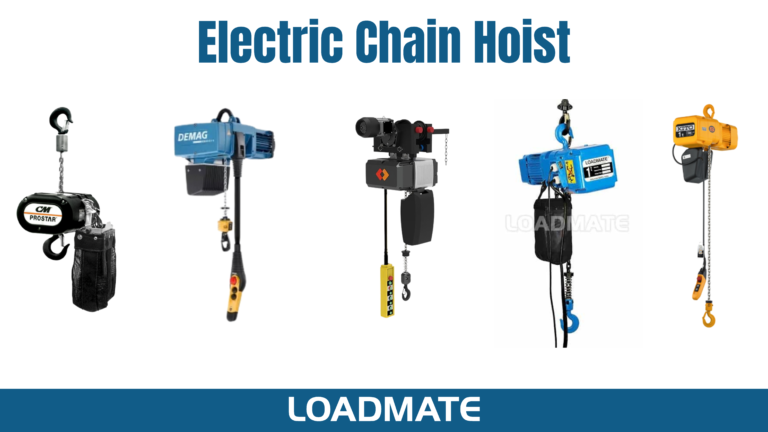
LOADMATE offers Manual and Electric Chain Hoists, HOT and EOT Cranes, Jib Cranes, and Gantry Cranes. Contact our sales team if you need assistance with your selection or buying process.
14.The Bottom Line: Prevention is Better Than Cure
Crane maintenance is not just a regulatory requirement; it's a moral and financial imperative. Regular crane inspections not only safeguard the well-being of your team but also protect your investment in heavy machinery. They enable you to catch minor issues before they escalate into full-blown problems that can halt production and result in hefty repair bills or irreversible tragedies.
The steps outlined above are integral to any robust crane maintenance strategy. By adhering to them, you're not just checking off a compliance requirement but actively contributing to a safer, more efficient, and more profitable operation.