The world of overhead cranes and hoists is like a language in itself – filled with intricate terms and nomenclature. Whether you're a novice navigating this intricate realm or a seasoned pro seeking a refresher, understanding industry-specific terminology is crucial.
A solid grasp on these terms not only heightens your safety and proficiency but also ensures that internal team communication is seamless. Moreover, it’s essential to be aware of the governing bodies, standards, and roles within the rigging industry. Let's embark on a journey through some indispensable rigging terms and insights.
1.Governing Bodies and Standards
- OSHA (Occupational Safety and Health Administration): They lay down the general safety and federal standards, which are reinforced through penalties and fines.
- ASME (American Society of Mechanical Engineers): Provides updated, detailed standards surpassing even OSHA.
- ANSI (American National Standards Institute): A private organization, setting a general framework for quality conformity and development assessment systems.
- Manufacturer's Recommendation: It's vital to heed product-specific guidelines about its maintenance, usage, and inspection.
- Company Guidelines: Bespoke safety rules tailored by employers for their industry.
2.Key Rigging Terminologies
- Overhead Crane (Bridge Crane): Used for lifting and transporting heavy items across a facility, it features a hook-and-line mechanism that traverses horizontally.
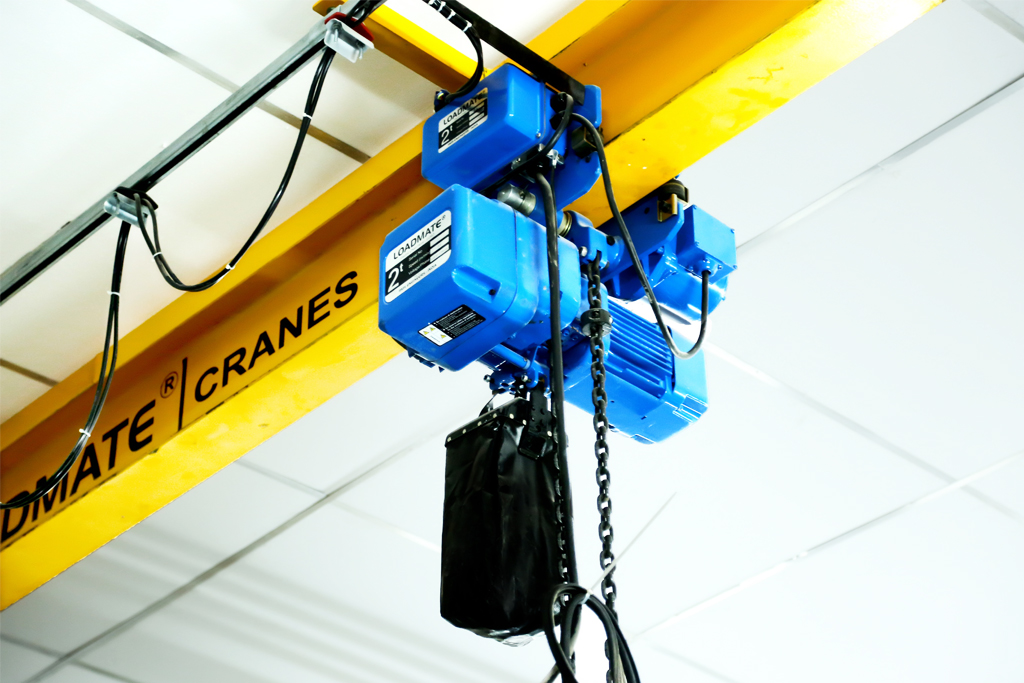
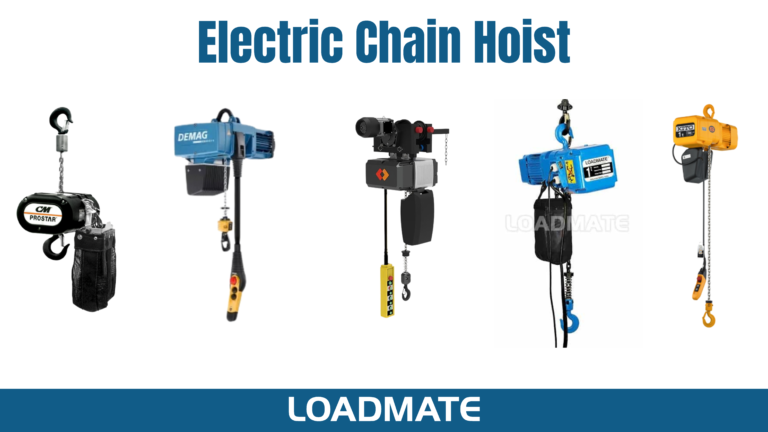
- Hoist: A device that facilitates the lifting or lowering of a load through a drum or lift-wheel.
- Load Block: The assembly comprising of a hook, swivel, sheaves, and more, suspended by the hoisting medium. This is where the load is connected.
- Sling: Straps or chains that fasten the load to the hoist. Varieties include chain slings, wire rope slings, and synthetic slings.
- Boom: The crane's extendable arm. Its flexibility varies – while some booms are static, others can be adjusted.
- Trolley: A unit that carries the hoist across the crane's bridge, aiding in horizontal movement of the load.
- Load Capacity: Signifies the crane or hoist's maximum lifting weight. Surpassing this can jeopardize safety.
- Dead End: The static part of the rope, contrasting the ‘live end’ which performs the lifting.
- Brakes: Devices in hoists and cranes that secure the load when the hoist isn't active.
- Rigging: The act of securing materials for lifting by machinery. Proper rigging is paramount for safety.
- Jib: A crane type where a horizontal member supports a movable hoist, which can be wall-fixed or on a floor pillar.
- Back-Hooking: A perilous method where the crane hook connects to its own load line.
- Drum: The cylindrical unit around which the hoist rope winds.
- Load Moment Indicator (LMI): A safety apparatus in modern cranes. It calculates the load's moment and alerts the operator about potential destabilization risks.
- Outrigger: Extendable legs on cranes that distribute the weight and provide stability during heavy lifts.
3.Rigging Personnel
- Designated Person: An individual assigned by the employer or their representative for specific tasks.
- Competent Person: With a firm grasp on applicable standards, they identify workplace hazards and possess the authority to rectify them.
- Certified Person: Not a standardized definition in rigging, but generally implies the person has received certain training or endorsement.
- Qualified Person: An individual with a recognized professional standing in their field due to their expertise, training, and credentials.
- Qualified Rigger: A person meeting all the prerequisites for a rigger role.
4.More Crane Terminology
- Axial Load- This term indicates the total force vertically applied to the jib crane structure. To measure this load, you have to multiply load weight by the design factor. Then, you can add the result to the overall crane weight.
- Disc brake- Disc brake is a type of locking mechanism that does not need pressure from the outside to turn out the retarding force.
- Explosion-proof crane- In some cases, you need to use the crane in a hazardous environment that is full of abrasive dust and ignitable fumes. It is a risk to work in this environment. Modern anti-explosion cranes have specialized designs for protecting your equipment and workers. These cranes play an important role in gas power plants, oil refineries, petrochemical plants, and several other sites.
- Lift height- It is the maximum height up to which a bucket, hook, or magnet can move vertically from the floor surface.
- Height Under Boom- It is another measurement starting from the ground to the underside jib crane's boom. To measure this HUB, you have to add the load lifting distance to the load height. You must also focus on the headroom needed for the trolley, attachments, and hoist.
- Monorail beam- You know that overhead bridge cranes have a system for sustenance on either side. However, monorail cranes remain fitted to the underside part of a monorail beam. By installing monorail beams in a limited space, you can join multiple beams together.
- Wheel load- It refers to the load without vertical force and impact on the wheel. The trolley needs to be on the bridge for the highest loading capacity.
- Dead Load- It indicates the load present on a structure, remaining in a stable position. While using a crane bridge, these loads include a cross shaft, footwalk, girders, and drive units.
- Crane, power-operated and cabin-operated- The power-operated crane has pneumatic, electric, and hydraulic mechanism. In the pulpit-operated crane, the operator controls the movement by using controllers of a control room.
- Limit Switch- Limit switch is a device intended for the automatic power cut at the travel limit for the crane motion.
- Dummy Cab- Dummy cab is the compartment of an operator on the radio-controlled and pendant crane. There is no permanently installed electrical controls for operators.
- Pendant Station- It is one of the handheld control systems, enabling you to manage additional tasks using machine setup and maintenance tools. As it suspends from a crane, we call it a pendant station. You can find a pendant station in different options and sizes.
- Counterweights- The term, counterweight, is applicable while you need to prevent your crane system from tipping at the time of lifting the load. It is the modular weight removed and added based on your load weight.
- Tag line- It is a rope line, intended to attach the load lifted. This line helps in controlling the swing and spin of the load, and your workers will stay safe as they maintain distance from the load.
- Remote receiver- Your crane has a remote-control system to help you in operating the crane from a distance. This receiver is a part of the system, connecting to the crane and converting the signal into crane action.
Conclusion
Understanding the intricacies of rigging is the first step to mastering this vast domain. With this guide, you now possess a foundational knowledge that can set the stage for deeper learning. Remember, in the realm of rigging, knowledge isn't just power – it's safety. Always refer to your training or consult industry experts when in doubt. Safety should always be the priority.