Overhead cranes, known as bridge cranes, are useful hoisting machines, riding on steel wheels along a strong beam. It comprises four parts, including the electrical system, bridge, travelling mechanism, and lifting mechanism. For reliable performance, these cranes are the best options for transporting heavy materials in the processing and manufacturing industry. Based on configurations, different types of cranes are available. We will present to you the brief details of different types of cranes.
Looking to buy? See the LOADMATE range of EOT overhead cranes with specifications.
1.HOT cranes
HOT is an abbreviation of 'Hand Operated Travelling' Crane. This crane is a special crane model with a stationary overhead model. It helps with the lateral movement of materials across two different planes. However, the HOT crane is not a frequently chosen option, as it does not help with the highest level of movement. The hoist remains attached to a bridge that is operable with an electric pendant.
The best fact is that HOT cranes do not need much maintenance. By analyzing these features, you may decide on the purchase of these cranes for your business.
One more category works below the main crane: a wall travelling crane runs on a runway fixed to the bay wall or columns and handles local lifts, leaving the overhead crane free for heavy loads.
2.EOT cranes
EOT crane or Electric overhead travelling crane is a very common model, comprising of parallel runways and travelling bridge. You need electricity to operate EOT cranes. EOT cranes come with a control pendant or an operator. In most cases, these cranes have their applications in warehouses and workshops. However, keep in mind that you must not use the normal EOT crane in a corrosive and combustible environment.
EOT cranes have stationery designs, and you can move them only up-down, left-right and forwards-backwards. For your indoor use, you may choose these cranes. Assembly lines, factories, warehouses and mining corporations get benefit from investing in EOT cranes. As EOT cranes are easily operable, novices prefer using them. Single Beam and Double Beam- they are two variations of EOT cranes.
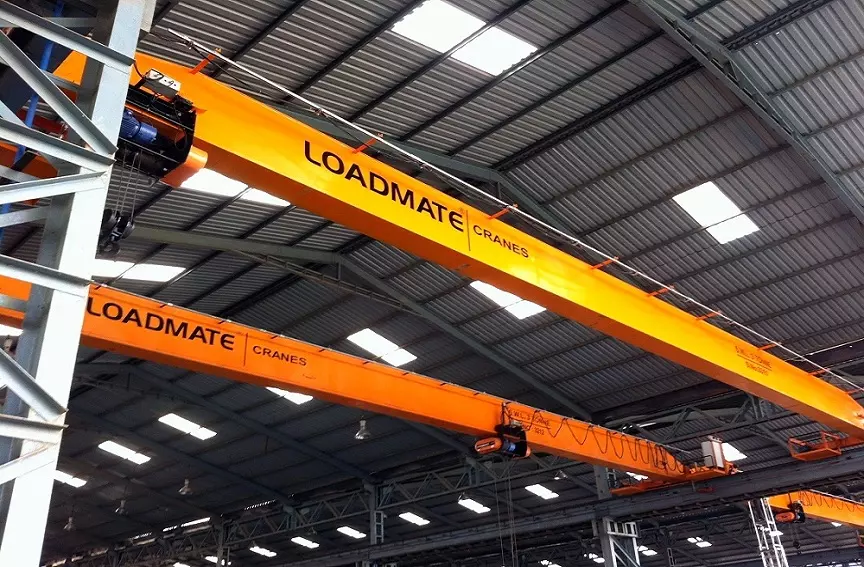
- Single Girder Cranes: From the name, you can easily guess that it uses one bridge beam. It also includes a trolley hoist and two-end trucks. Single girder cranes are lightweight options, and their load capacity can be up to 20 tons. They can span up to a level of 55 Meters. Moreover, for the simple hoist and trolley design and easier installation, these girder cranes are available at a lower price.
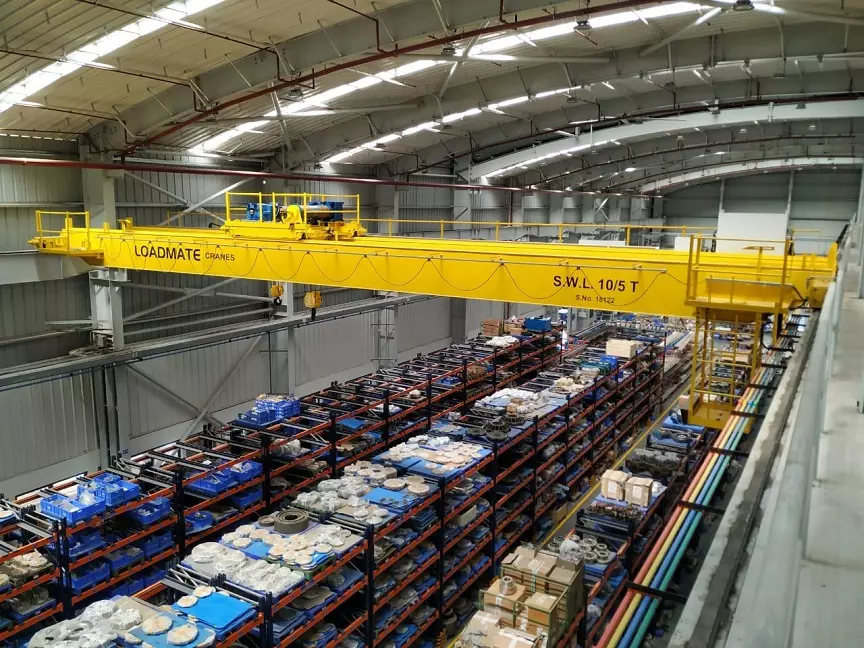
- Double Girder Cranes: These cranes include two bridge girders with electrical parts, a trolley hoist, and two-end trucks. Their loading capacity is very high, and it can range between up to 800 tons. Double girder cranes can move bulky items very easily. Moreover, you can equip them with an underhung and a top running trolley. You may also customize these cranes with walkways, cabs, magnet cable reels, and other tools. For manufacturing these double girder cranes, manufacturers apply the design principles of an EOT crane. Thus, you can find a complicated design in double girder cranes. These cranes have the capability of withstanding heavier use.
3.Gantry crane
It is a specialized crane with an integrated self-supporting structure. A gantry crane has legs to sustain the hoist, bridge, and trolley. Those legs move on rails, embedded on the floor. You can choose this crane to manage a lightweight load. The best manufacturer ensures the corrosion-resistant structure and portability of this crane. When you think of avoiding an overhead runway system, you may rely on this gantry crane. The most common applications of gantry cranes are in railyards, shipyards, and construction.
Gantry cranes include two vertical components to bear the crane’s weight and the load. You cannot find wear and tear due to your regular use. While you are working outside, you can derive value from those cranes. Due to the presence of wheels, Gantry cranes are easily movable.
Gantry cranes are available in different designs-
- Adjustable– Intended for warehousing applications where you need to move materials through doorways and aisles
- Portable– Best application is in plant maintenance that needs relocation and replacement of machinery and equipment.
- Track-Mounted– It is useful to lift and move substantial loads over a chosen route.
4.Demystifying the Types of Overhead Cranes
In the vast universe of overhead cranes, there are six classes designed for different purposes and levels of usage:
- Class A Cranes: Ideal for precise handling at slow speeds. Perfect for work that involves extended idle periods.
- Class B Cranes: Meet light service requirements, also operating at slower speeds.
- Class C Cranes: These are great for moderate service requirements, like in paper mills or machine shops.
- Class D Cranes: Tailored for heavy service needs, these are found in container yards, foundries, and steel warehouses.
- Class E Cranes: Designed for severe conditions, they’re commonly used in cement mills, lumber mills, and scrap yards.
5.Understanding the Variants of Bridge Cranes
The term 'bridge cranes' is often used interchangeably with overhead cranes, but there are three main types you should know:
- Single Girder Cranes: Cost-effective and quicker to install, these have a single beam supported by end trucks or end carriages on each side.
- Top-Running Cranes: These versatile cranes have no capacity limitations and are ideal for both small and large applications.
- Double Girder Cranes: Designed for heavy-duty tasks, they can carry over 200 tons and are perfect for customization as the hoist isn't underneath the beams.
6.Under-Hung vs Top-Running Cranes
Applications of two types of cranes.
Ceiling-mounted under-running bridge cranes are best for manufacturing processes where you need to lift and transport lightweight materials. In the under-hung condition, they ensure easy interconnection with the interlocking mechanism.
Conversely, top-running systems are highly valuable for scenarios where you need easy lifting to transfer heavy loads. While your load weight is more than 20 tons, you may choose these top-running systems.
Pros of under-hung cranes
- One of the best features is that under-hung cranes are easily operable in wide bays, and thus, it reduces equipment costs and simplifies design requirements.
- You can install more than one under-hung crane runway, close to each other, and working together.
- The use of switches and interlock systems with these under-hung cranes can lower the cost of material handling equipment.
Pros of top-running cranes
- There is no limiting capacity with these top-running overhead cranes. You can use these systems to deal with both small and large-capacity loads (ranging between 1 ton and 250 ton.).
- These cranes offer some additional lifting height for industrial facilities that have very limited headroom.
- The size of these cranes is bigger in comparison to under-hung cranes. With their higher capacities, they are capable of managing wider spans. Moreover, top-running cranes are easily installable systems with minimal maintenance needs.
Configurations of top-running cranes
The top-running crane setup enables you to achieve long bridge spans very easily. Moreover, since the hook height is higher, you will get much headroom for lifts.
As there is a need for additional structures for sustenance, the overall configuration fits best to manage large lifts. Another notable thing is that the top-running crane includes a track system placed on the top section of every runway beam. That is why the end trucks can move the hoist and bridge along your system. Furthermore, you can configure these cranes with both double girder and single girder designs. For the single girder solution, you need a hoist and an under-hung trolley with a hoist. Conversely, the double girder-version uses the hoist with the top-running trolley.
Configurations of under-hang cranes
These under-hang cranes remain fitted to the structure, and thus, they do not need a column while your building sustains them. Due to this configuration, the service area coverage is higher with this under-hang crane. Below this overhead crane, you can find the workspace with no obstacle caused by columns. That is why it is the best choice, while your floor space is very limited.
Another notable thing about this crane model is the hook height. You can notice a reduced distance between the floor and the hook for these configurations. Overall, we can say that you have to decide on the crane style based on your building and the load lifting needs.
The under-hung crane also uses wheels properly backed up by the runway beam’s bottom flange. These wheels help in moving your bridge through the runway.
In most cases, there is a single girder used with these under-hung cranes, as users engage them with light and low-capacity applications. However, for your needs, you may use them with double girders to increase the capacity and have a better hook height.
Finally, we like to mention another overhead crane design, which combines both under-hung and top-running models. We refer to it as the single-leg gantry crane intended for higher and more complicated material handling needs.

While your industrial plants do not fit double leg gantry cranes for limited spaces, you can choose these models. Now, you can easily choose the best overhead cranes for your purposes.
You can reach out to us for any of your requirements of Material handling equipment like Manual Chain Pulley Blocks, Electric Hoist, Winches, Slings, Spreader beams & Cranes.
7.Light Crane Systems
Why Light Cranes Are Popular in Assembly Work Environments
Light cranes are typically used in industries that require intricate assembly work, such as in the manufacturing of kitchen appliances. In these settings, they come in handy for moving smaller components, as well as unloading or loading more cumbersome outer frames that are too heavy for manual handling. Light cranes are typically mounted on aerial frames, making it easier to swiftly move parts or materials within the manufacturing facility.
Easy to Install and Unobtrusive
The name "light crane" is more than apt—these machines are lightweight yet robust. Designed with the modern manufacturing process in mind, their ergonomic and streamlined structure fits seamlessly into any factory setup. In contrast to the more cumbersome EOT (Electric Overhead Traveling) cranes or Underslung Cranes, light cranes offer easier installation and require a simpler supporting structure.
Simplified Maintenance and Relocation
Light cranes come with a straightforward configuration, which makes them easier to maintain or service. This is a huge advantage for factories with limited space or for those who need to adapt their setup frequently. The cranes consist of key components like a suspension, a profile, and a chain hoist, each of which can be easily disassembled and reassembled when relocating the crane.
User-Friendly Operations
Operating a light crane is often a much simpler task compared to using an EOT crane. These are generally manual systems where the operator moves the crane by pushing or pulling with very little effort. They can be installed on various types of hoist systems, adding to their flexibility.
Faster Turnaround Times
Speed and productivity often go hand-in-hand in manufacturing settings. Light cranes are compatible with existing EOT crane systems and can significantly reduce wait times during operations, thereby increasing overall efficiency.
Material Choices and Features
Light cranes are available in both aluminium and steel, providing options based on your specific needs. They come with features like a rolling resistance system to minimise the physical effort needed for operations. Furthermore, many modern models are designed to be rust-proof, increasing their lifespan.
Versatile Applications
Profile cranes are highly versatile and can be used in a variety of settings:
- Warehouses: They're great for shifting boxes across different areas.
- Shipbuilding: These cranes can move smaller items and materials, speeding up ship construction.
- Construction: Similar to shipbuilding, light cranes can efficiently move materials across construction sites.
- Automotive Industry: They can be used to move car parts like doors, hatches, and engine components.
- Production Units: Especially useful for handling smaller items and packaging.
8.When to Motorize Your Crane System
- Unmanageable Load with Manual Operations: Assess the application of your crane. If the load under your hoist is too cumbersome to move manually, motorisation might be necessary. Consult your workers about the effort required to move the system from one site to another. If it demands significant effort, a motorised crane system could be the solution.
- Obstacles in the Path: The load's path should be clear of obstacles. However, if large objects, machines, or racks obstruct the path, motorisation becomes a viable option. Proper motorisation allows workers to remotely control their movement, making it easier to navigate around and over obstacles. Motorised gantry cranes or overhead cranes could be the best choice in these situations.
- System Size: The size of your crane system, specifically the height, is another factor to consider when deciding on motorisation. If your cranes have a higher lifting height, motorised lifting could be beneficial. Also, if the hoist trolley height increases, it might become challenging to move the load manually. Motorisation can make the system more ergonomic and user-friendly for your workers.
If your crane system has a high lifting height, span, or capacity, motorisation should be considered as part of your material handling process. Additionally, inspect the trolley height to determine the weights of your system and load. In summary, you must understand how weight and height affect load movement to decide on motorisation.
Overhead Cranes for Aerospace, Marine and Offshore Duty
- Aerospace: long-span overhead cranes move wings, tails and fuselage sections between assembly steps, and interlocking systems connect one working zone to the next.
- Marine duty: cranes installed close to the sea need marine-duty protection against corrosion. Wind limits and distance from the sea have to be stated when the crane is specified.
- Offshore: offshore lifting adds vessel movement, wind and sea state to the load case, so the hoist and crane are selected for those conditions.
Basic Overhead Crane Specifications
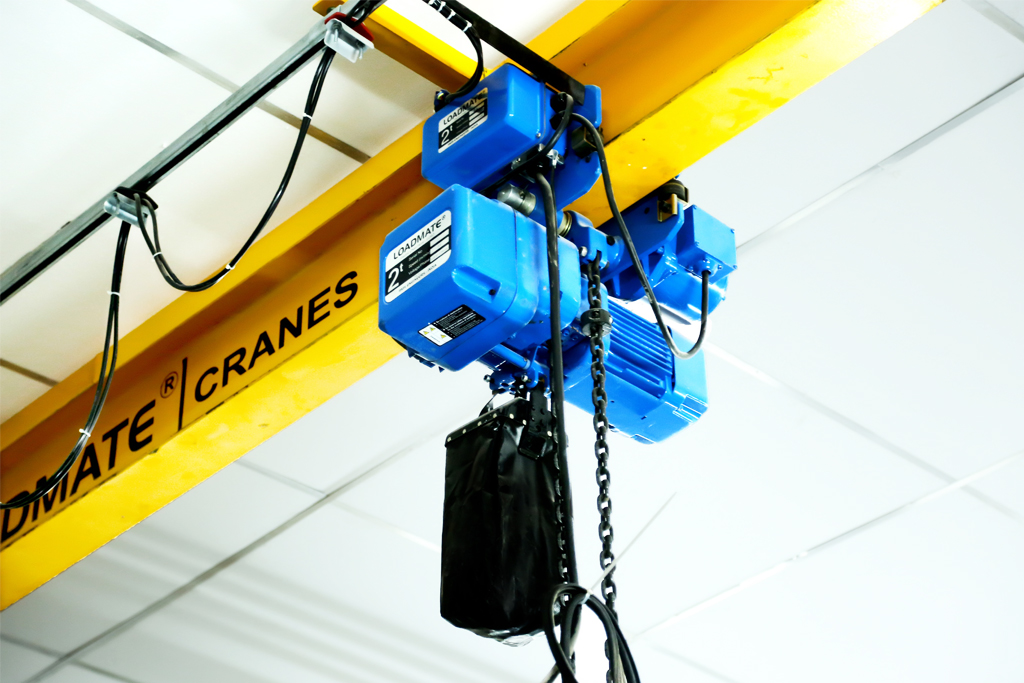
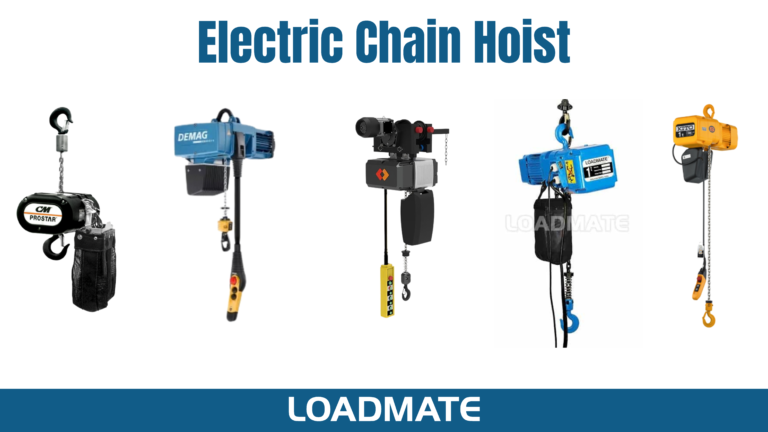
An overhead crane is made up of a hoist (electric chain hoist or electric wire rope hoist), a bridge and end carriages. The hoist gives the vertical movement, and the bridge and trolley give the horizontal movement. The safe working load (S.W.L.) is marked on both sides of the crane.